



Best GoPro Hero 13 Black Settings for Motorcycle Riding
Best GoPro Hero 13 Black Settings for Motorcycle Riding
The exact Pro Mode settings, ND filter picks, and color grading workflow to get cinematic POV footage on every ride.
The GoPro Hero 13 Black is the most capable GoPro ever strapped to a helmet — 5.3K resolution, HyperSmooth stabilization, GP-Log color profile, and Bluetooth mic support baked in. But out of the box, it shoots in Easy mode with everything on Auto. That's fine for vacation clips. It's not fine for riding footage.
Auto exposure pumps brightness every time you pass under a bridge. AutoBoost crops your frame without asking. And default sharpening smears fine detail into a digital mess. This guide walks through the exact settings that make your favorite motovloggers' footage look cinematic and smooth — plus the two gear upgrades that make the biggest visual difference.
GoPro Hero 13 Motorcycle Settings (Quick Reference)
| Setting | Recommended Value |
|---|---|
| Mode | Pro |
| Resolution | 4K |
| Frame Rate | 24fps |
| Shutter Speed | 1/48 |
| ISO | 100/100 |
| Lens | Linear |
| HyperSmooth | On |
| ND Filter | ND32 (sunny days) |
1. Chin Mount Setup — Getting the Best Angle
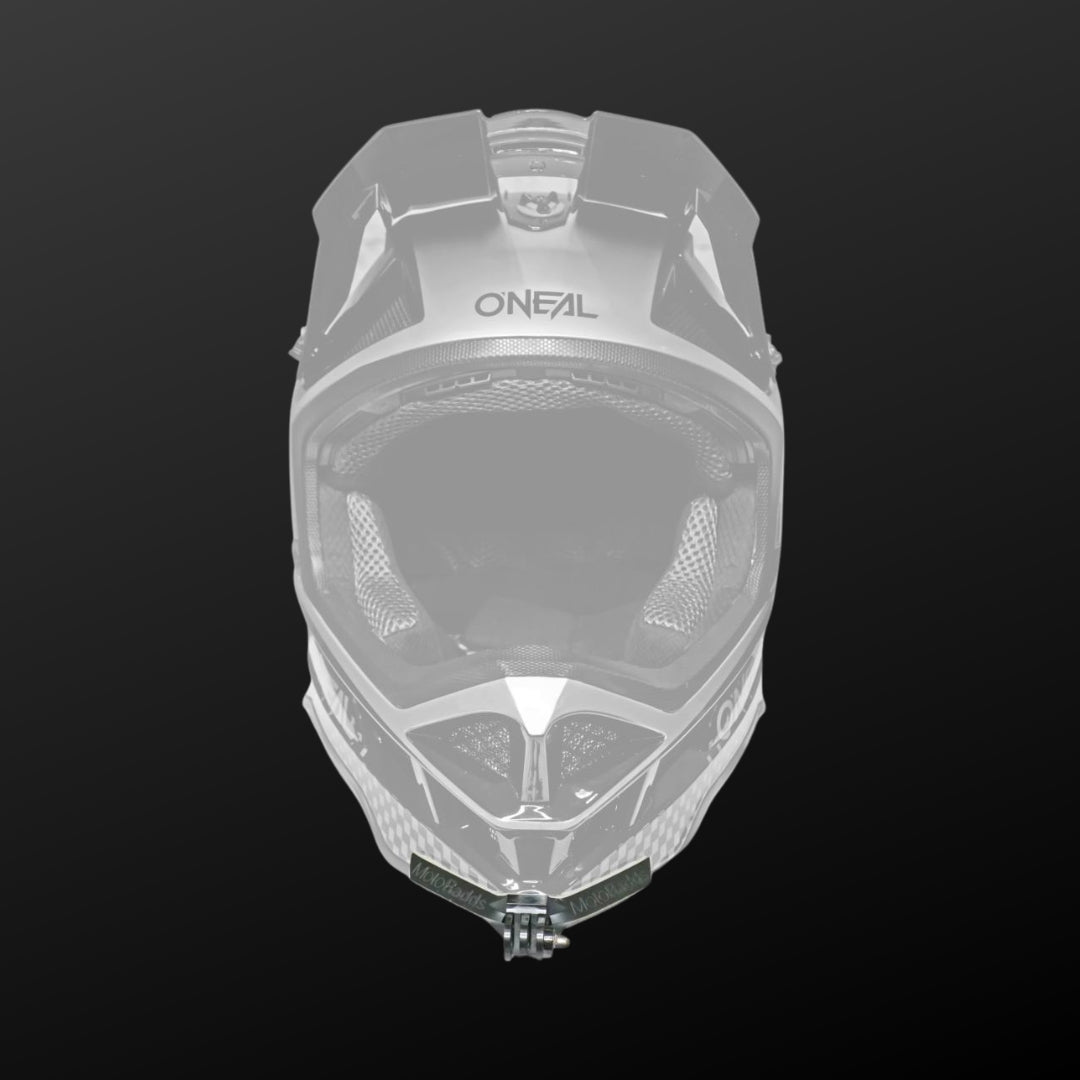
Before you touch a single camera setting, the mount has to be right. A chin mount produces the most natural, eye-level POV of any helmet position — it follows your head movement naturally and sits low enough to avoid wind drag. Side mounts skew the horizon, top mounts feel like drone footage, and chest mounts catch your arms more than the road.
Here's the install process we recommend with the MotoRadds FLEX Slim Chin Mount:
01 Pre-Shape the Mount
Bend the steel-core mount to match your helmet's chin curve. The steel wants to spring back, so put in a little extra bend near the tips to compensate for that tension. This prevents the edges from lifting over time.
02 Prep the Surface
Clean the chin bar with the included alcohol prep wipe. Then hit the area with a hairdryer or heat gun for 1–2 minutes. Warming the surface lets the 3M VHB adhesive flow into the texture of the helmet for a significantly stronger bond.
03 Apply — Center First
Press the center of the mount down firmly, then knead outward toward the tips. Small perimeter gaps are normal — close them by pressing from the opposite edge. Hold firm pressure for 60 seconds.
04 Attach the Hardware
Clip on the extension joint (this is what lets you angle the camera), then the quick-release plate, then mount your Hero 13.
05 Dial in the Angle
This is the part most people get wrong. Point the camera back and upward — almost like it's aimed at the sky. It feels strange, but because your chin angles downward while riding, this produces the most natural, eye-level forward POV in your footage.
Find Your Exact Helmet Mount
The MotoRadds FLEX Slim fits over 2,000 helmets — Shoei, AGV, Arai, HJC, Bell, Scorpion, and more. Steel-core bend with 3M VHB adhesive for a flush, rattle-free seal.
Browse Chin Mounts →2. Every Camera Setting, Explained
The Hero 13 ships in Easy mode. That gives you a handful of presets and zero manual control — it's the training wheels GoPro puts on for beginners. To unlock the settings that actually matter, you need to switch to Pro mode. Swipe down from the top of the screen, tap Controls, and flip Easy to Pro. Now you have access to everything below.
| Setting | Value | Why |
|---|---|---|
| Mode | PRO | Swipe down → Controls → switch Easy to Pro. This unlocks manual control over everything below. |
| Profile | Log or Standard | Log (GP-Log) captures maximum dynamic range for color grading in post. Standard gives you vibrant, ready-to-post footage. Pick one and stick with it — switching mid-ride makes editing a headache. |
| Resolution | 4K or 5.3K | 4K is the sweet spot for most riders — sharp, manageable file sizes, and full HyperSmooth support. 5.3K gives you extra resolution to crop or reframe in post, but eats storage faster. Both shoot 16:9. For portrait content, use a vertical mount adapter instead of cropping. |
| Frame Rate | 24fps | The cinematic standard. 24fps produces natural motion blur that makes footage feel filmic, not "video-ish." Bump to 60fps only if you plan to use slow-motion in post. |
| Lens | Wide or Linear | Wide gives you the classic GoPro look — sweeping, immersive, great for canyon roads. Linear removes the fisheye distortion for a more natural, cinematic perspective. We prefer Linear for motovlogging and Wide for trail riding. |
| HyperSmooth | ON | Keep HyperSmooth turned on, but avoid AutoBoost. AutoBoost aggressively crops the image to stabilize, and the crop changes frame to frame — it creates an inconsistent, jumpy feel that's worse than the vibration it's trying to fix. |
| Bit Depth | 10-Bit | 10-bit captures over a billion colors compared to 8-bit's 16 million. This gives you dramatically more flexibility in color grading — smoother gradients, less banding in skies, and more detail in highlights and shadows. Use 8-bit only if you're shooting Standard profile with no plans to edit. |
| Bit Rate | High | ProTune → Bit Rate → High. More data per frame means more detail retained, especially in fast-moving scenes where compression would normally smear textures. |
| Shutter Speed | 1/48 | The "double the frame rate" rule for cinematic motion blur: at 24fps, use 1/48. This creates smooth, natural motion in your footage. This is where ND filters become essential — see section 3. |
| ISO Min / Max | 100 / 100 | Lock both to 100 for the cleanest, most noise-free image. If your ride includes tunnels, heavy tree cover, or dusk, push Max to 200 so the camera can brighten slightly in dark sections without introducing visible grain. |
| Color | GP-Log or Natural | GP-Log is GoPro's flat color profile — it looks washed out on camera but retains maximum dynamic range for grading. Natural gives you punchy, realistic color straight from the camera. If you don't plan to edit, use Natural. |
| Sharpness | Low | GoPro's default sharpening is aggressive and creates digital halos around edges. Setting it to Low preserves natural detail. You can always add sharpness in post — you can't remove it. |
| Denoise | Low | ProTune → Denoise → Low. The built-in noise reduction tends to smear fine detail at anything above Low. Keep it dialed back to preserve texture in asphalt, foliage, and distant objects. |
| Wind Reduction | On | Cuts down on the low-frequency rumble from wind hitting the mic at speed. Keep this on for riding — it makes a noticeable difference in audio quality even if you're not recording commentary. |
3. ND Filters — Why Your Footage Looks Washed Out Without Them
Here's the problem nobody talks about when they recommend manual shutter speed: if you lock it to 1/48 on a sunny day, the sensor gets flooded with light. The image blows out. Highlights clip. The sky turns into a white wall. The Hero 13's fixed f/2.8 aperture can't physically let in less light at that shutter speed without help.
That help is an ND filter.
ND (Neutral Density) filters are essentially sunglasses for your lens. They reduce the amount of light hitting the sensor without affecting color, which lets you keep that slow, cinematic shutter speed even in bright conditions. Without one, you're forced to either crank the shutter speed up (which kills motion blur and makes footage look jittery and "GoPro-ish") or leave it on Auto (which defeats the entire purpose of Pro Mode).
This is not a nice-to-have. It's the difference between footage that looks like a dashcam and footage that looks like it belongs in a riding documentary. Every professional motovlogger and filmmaker uses ND filters — and the Hero 13's fixed aperture makes them even more important because the camera has no other way to reduce light intake.
Which Filter for Which Conditions
If you only buy one, get the ND32 — it covers the most common riding conditions. But a full set (ND8, ND16, ND32, CPL) means you're covered from dawn to dusk without ever compromising your shutter speed.
MotoRadds ND Filter Pack for GoPro Hero 13
All 4 filters (ND8, ND16, ND32, CPL) precision-cut for the Hero 13 Black. Snap on in seconds, no alignment fuss. This is the single biggest upgrade you can make to your footage quality.
Shop ND Filters →4. Color Grading for Riders (The Easy Way)
If you're shooting in GP-Log, your footage will look flat and desaturated straight off the camera. Don't panic — that's the whole point. All that dynamic range is sitting there waiting for you to shape it. Here's the fastest way to go from flat to cinematic.
01 Apply a LUT
A LUT (Look-Up Table) is a one-click color transform. Search for free GP-Log LUTs online — there are dozens of great options. In your editor, drop it on as an adjustment layer. This gets you about 80% of the way to a finished look.
02 Balance Exposure
Motorcycle footage constantly fights the bright sky vs. dark road problem. Pull highlights down about 20 points and lift shadows slightly. This brings back cloud detail in the sky without losing texture in the asphalt.
03 Add Punch
Bump contrast by +15 and saturation by +10. For a cinematic feel, pull a subtle orange-and-teal split tone using your curves or HSL panel — orange in the highlights (warm road, skin tones) and teal in the shadows (sky, pavement).
Recommended Editing Software
DaVinci Resolve — free, industry-standard, and has the best LUT and color grading tools of any editor. It's free and handles GP-Log beautifully. CapCut is a great free option for mobile and desktop with easy LUT import if you need a fast turnaround. Premiere Pro works well if you're already in Adobe's ecosystem.
5. Gear That Actually Makes a Difference
You don't need a lot of accessories. But these four close the gap between "hobbyist clips" and footage you're genuinely proud of.
Chin Mount
The foundation of everything. A proper chin mount gives you stable, centered, eye-level POV that no other mounting position can match. The MotoRadds FLEX Slim uses a steel core with 3M VHB adhesive — it bends to fit your exact helmet shape and stays locked in at speed.
ND Filter Pack
We covered this above, but it bears repeating: ND filters are the single biggest visual upgrade you can make after getting your settings dialed. They're the reason pro footage looks smooth and cinematic while most YouTube riding clips look harsh and blown out. A full set of four covers every condition from dawn to high noon.
Screen Protector
The Hero 13's front and rear screens sit exposed on your chin bar. One bump during installation or a piece of road debris and you're looking at a scratched display. A tempered glass protector costs almost nothing and saves you a repair.
Vertical Mount Adapter
If you post to TikTok, Instagram Reels, or YouTube Shorts, a vertical adapter lets you shoot portrait orientation using the full sensor — instead of cropping a 16:9 frame down to 9:16 and losing two-thirds of your resolution.
DJI Mic Mini + In-Helmet Mount
The Hero 13 supports Bluetooth mic pairing, and the DJI Mic Mini is the best compact option for it. Clip it inside your helmet for clean voice commentary without cables. If you're motovlogging, this is what separates watchable content from wind-noise static.
The Full MotoRadds Setup
Chin mounts, ND filters, screen protectors, adapters, and more — everything built specifically for riders who care about their footage.
Shop All Mounts & Accessories →Frequently Asked Questions
What are the best GoPro Hero 13 settings for motorcycle riding?
Use Pro mode with 4K/24fps, 1/48 shutter speed, ISO 100/100, Linear lens, and an ND32 filter for sunny conditions.
Do I need ND filters for motorcycle filming?
Yes, ND filters are essential for cinematic 1/48 shutter speed in bright conditions. Use ND32 for sunny days.
What's the best mounting position for motorcycle GoPro?
Chin mount provides the most natural, eye-level POV and follows head movement naturally.
TL;DR — Quick Settings Cheat Sheet
- Mode PRO
- Profile Log (grade in post) or Standard (ready to post)
- Resolution / Frame Rate 4K or 5.3K / 24fps (60fps for slow-mo)
- Lens Linear (cinematic) or Wide (immersive)
- HyperSmooth On (avoid AutoBoost)
- Bit Depth / Bit Rate 10-Bit / High
- Shutter Speed 1/48 + ND filter
- ISO Min / Max 100 / 100 (push Max to 200 for tunnels)
- Color GP-Log (grade in post) or Natural (ready to post)
- Sharpness / Denoise Both Low
- Wind Reduction On
Dial these in once, mount up, and ride. The camera does the rest.
Want to capture other exciting POVs? Check our full mount collection — we have a mount for every POV on your motorcycle.
This guide is maintained by the MotoRadds team and updated as GoPro releases firmware changes. Last updated April 2026.

![MotoRadds vs. Ride Tech Moto: Which Chin Mount Actually Backs Its Promises? [2026]](http://motoradds.com/cdn/shop/articles/MotoRadds_vs_RideTech_Moto_Warranty_Clauses_2026_33e07645-121d-4dbc-871c-16d629525d00.jpg?v=1788255661&width=1080)
![MotoRadds vs. POV Mounts: The Real Cost of Buying a Chin Mount from Italy [2026]](http://motoradds.com/cdn/shop/articles/motoradds_vs_pov_mounts.jpg?v=1788255759&width=1080)
Leave a comment